As we have been mentioning over the past year, gamification continues to play an increasing role in modern classrooms. However, this year, disciplines such as robotics, quantum computing and creative Makerspaces are gaining ground in the educational trends expected to leave their mark in the current school year.
5. Robotics
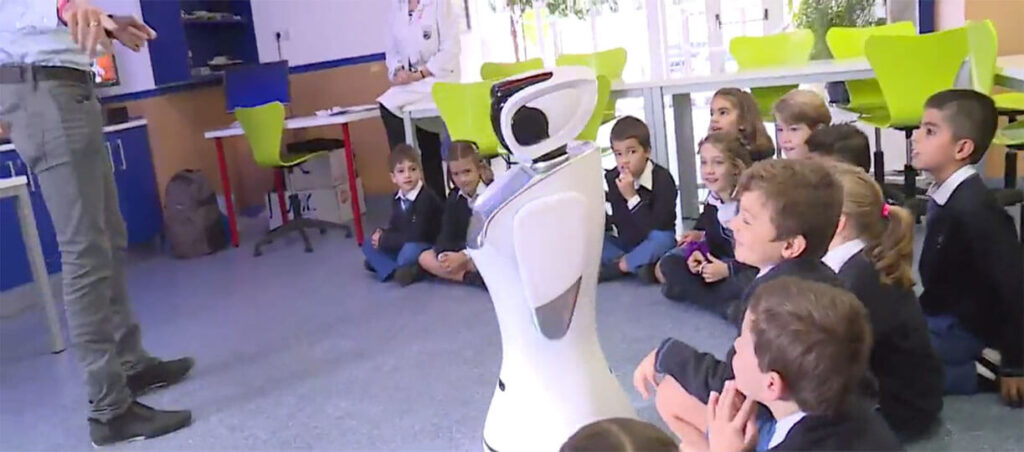
The schools that have better adapted to new technologies choose robotics as one of the essential elements for the academic development of their students. It is a subject that includes such diverse and complementary topics as engineering, programming, mathematics or physics. The objective is only to connect better with the students, but to prepare them for the challenges and challenges of the current work world.
Although in the beginning the investment can be significant for many schools, the benefits are widely acknowledged by teachers, as Jorge Calvo explains in this article. The renowned teacher of the European School of Madrid, explains how he promoted the methodological change in his classroom with the creation of the European Valley workshop.
Los colegios que mejor han logrado adaptarse a las nuevas tecnologías, eligen la robótica como uno de los elementos esenciales para el desarrollo académico de sus alumnos. Se trata de una asignatura que incluye temas tan diversos y complementarios como la ingeniería, la programación, las matemáticas o la física. El objetivo es únicamente el de conectar mejor con los estudiantes, sino el de prepararlos para los retos y desafíos del mundo laboral actual.
Aunque en un principio la inversión puede ser significativa para muchos centros, los beneficios están ampliamente reconocidos por los maestros, tal y como explica Jorge Calvo en este artículo. El reconocido maestro del Colegio Europeo de Madrid, explica cómo impulsó el cambio metodológico en su aula con la creación del taller European Valley.
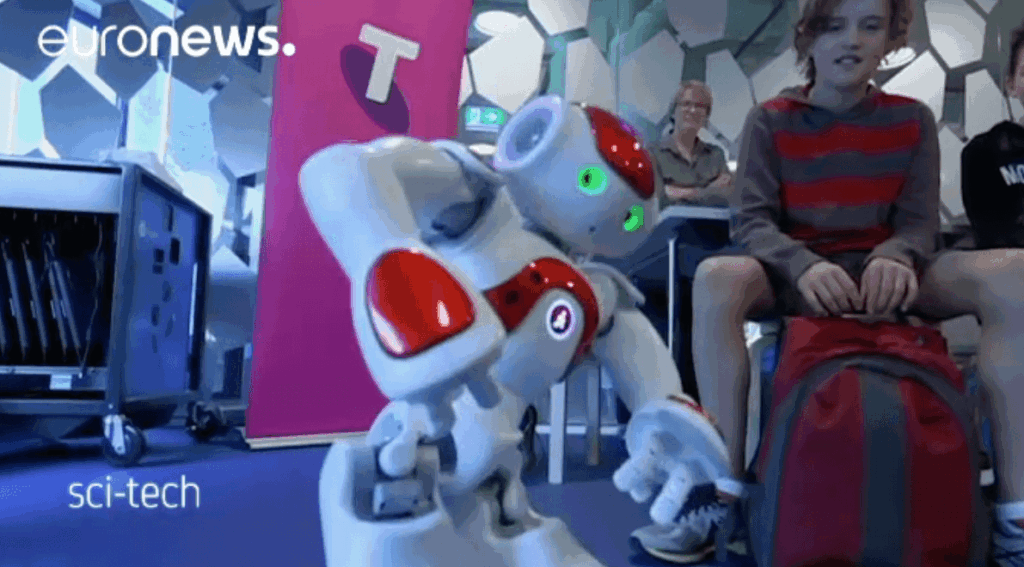
Robots are likely to become a commonplace tool in modern classrooms.
6. Gamification
It is one of the most important trends in the current education sector. With as many variants as teachers who use it in their classrooms, their techniques are increasingly imposed as a teaching tool that helps teachers to transmit knowledge to their students and, implying them throughout the learning process.
Es una de las tendencias más importantes del sector educativo actual. Con tantas variantes como docentes que la utilizan en sus aulas, sus técnicas se imponen cada día más como una herramienta de enseñanza que ayuda a los profesores a transmitir conocimiento a sus alumnos y, implicándolos en todo el proceso de aprendizaje.
In addition to the popular Minecraft, there are endless alternatives of pedagogical gamification that arise almost daily.
Video games, music, movies or a good documentary, abysmally facilitate the way we memorize concepts, according to Ignacio Medel, gamer and teacher of Internet Didactics and Primary Grade at the International University of La Rioja , as well as member of the Research Group The Didactics of Social Sciences and Pedagogical Innovation in the Digital Society (INCISO).
With him we were able to speak during the last edition of the Educational Innovation Fair, organized by the Sapere Aude school.
“We believe that videogames have a lot of educational potential because, in the first place, they are something that motivates kids, it attracts them, we make them stick to them for a long time … what we try to look for is in what way we can draw that educational potential and transfer it to the classes to use it as one more resource “.
Además del popular Minecraft, existen infinitas alternativas de gamificación pedagógica que surgen casi a diario.
“Creemos que los videojuegos tienen bastante potencial educativo porque, en primer lugar, son algo que motiva a los chavales, les atrae, hacemos que estén pegados a ellos durante bastante tiempo… lo que tratamos de buscar es de qué manera podemos sacar ese potencial educativo y trasladarlo a las clases para utilizarlo como un recurso más”.
7. Computación cuántica
Although it has existed for years, it is now when quantum computing begins to be heard outside professional technological environments, especially thanks to the launch of the first commercial quantum computer. Unlike classical computers – whose power begins to show its limits – quantum equipment is designed to solve especially complex problems.
Now that a smartphone has more processing capacity than the most sophisticated computer of the 2000s, new challenges such as artificial intelligence and machine learning require more complex calculations and, above all, faster ones.
Aunque existe desde hace años, es ahora cuando la computación cuántica empieza a ser escuchada fuera de entornos tecnológicos profesionales, sobre todo gracias al lanzamiento del primer ordenador cuántico comercial. A diferencia de los ordenadores clásicos – cuya potencia empieza a mostrar sus límites – los equipos cuánticos están diseñados con la finalidad de resolver problemas especialmente complejos.
Ahora que un smartphone dispone de más capacidad de procesamiento que el más sofisticado ordenador de los años 2000, nuevos retos como la inteligencia artificial y el machine learning exigen cálculos más complejos y, sobre todo, más rápidos.
When we enter the world of atomic and subatomic particles, things begin to behave in unexpected ways, and this is where quantum computers come in. That is to say, unlike the classic binary system of ordinary computers, a quantum computer uses what are known as qubits.
It is difficult to predict how quantum computing will change our world, simply because there will be applications in all industries, but what is clear is that it will have a very significant impact on education and may even revolutionize modern teaching ways of thinking.
Cuando entramos en el mundo de las partículas atómicas y subatómicas, las cosas comienzan a comportarse de formas inesperadas, y es aquí donde entran los ordenadores cuánticos. Es decir, a diferencia del clásico sistema binario de los ordenadores corrientes, un ordenador cuántico utiliza los conocidos como qubits.
Es difícil predecir cómo la computación cuántica cambiará nuestro mundo, simplemente porque habrá aplicaciones en todas las industrias, pero lo que está claro es que tendrá un impacto muy significativo en la educación y podrá incluso revolucionar las formas de pensamiento la enseñanza moderna.
Creative Makerspaces, also called FabLabs or Hackerspaces, refer to workshops that allow students to explore their own capabilities with the help of the most innovative technological equipment. This type of workshops began to be developed in business environments with the aim of creating a space where entrepreneurs and innovators could meet to generate new ideas.
In the educational environment, it is possible to achieve the same type of tangible experience.
Creative Makerspaces, también llamados FabLabs o Hackerspaces se refieren a talleres que permiten a los estudiantes explorar sus propias capacidades con la ayuda de los equipos tecnológicos más innovadores. Este tipo de talleres comenzaron a desarrollarse en entornos empresariales con el objetivo crear un espacio donde emprendedores e innovadores pudieran reunirse para generar nuevas ideas.
En el entorno educativo, es posible conseguir el mismo tipo de experiencia tangible.
In the schools where these spaces have been created, an important impact has been noted in:
Development of digital skills of students
Personalized learning plans
Stewardship projects
To promote the creativity of the students in a complementary way to the traditional one is without a doubt a must in the current education.
En los colegios donde se han creado estos espacios, se ha notado un importante impacto en:
Desarrollo de competencias digitales de los alumnos
Planes de aprendizaje personalizados
Proyectos de corresponsabilidad
Impulsar la creatividad de los alumnos de una forma complementaria a la tradicional es sin duda un must en la educación actual.
Para ofrecer las mejores experiencias, utilizamos tecnologías como las cookies para almacenar y/o acceder a la información del dispositivo. El consentimiento de estas tecnologías nos permitirá procesar datos como el comportamiento de navegación o las identificaciones únicas en este sitio. No consentir o retirar el consentimiento, puede afectar negativamente a ciertas características y funciones.
Funcional
Always active
El almacenamiento o acceso técnico es estrictamente necesario para el propósito legítimo de permitir el uso de un servicio específico explícitamente solicitado por el abonado o usuario, o con el único propósito de llevar a cabo la transmisión de una comunicación a través de una red de comunicaciones electrónicas.
Preferencias
El almacenamiento o acceso técnico es necesario para la finalidad legítima de almacenar preferencias no solicitadas por el abonado o usuario.
Estadísticas
El almacenamiento o acceso técnico que es utilizado exclusivamente con fines estadísticos.El almacenamiento o acceso técnico que se utiliza exclusivamente con fines estadísticos anónimos. Sin un requerimiento, el cumplimiento voluntario por parte de tu proveedor de servicios de Internet, o los registros adicionales de un tercero, la información almacenada o recuperada sólo para este propósito no se puede utilizar para identificarte.
Marketing
El almacenamiento o acceso técnico es necesario para crear perfiles de usuario para enviar publicidad, o para rastrear al usuario en una web o en varias web con fines de marketing similares.