Skip to content
  • Blog de BlinkLearning
  • Blog de BlinkLearning
  • Blog de BlinkLearning
  • Blog de BlinkLearning

Search the blog

Main sections of the blog

  • AI
  • Schools
  • Publishers
  • Responsible technology
  • AI
  • Schools
  • Publishers
  • Responsible technology
  • EN
    • ES
    • BR
Responsible technology

4 EdTech trends for 2019

15 de February de 2019 BlinkLearning Comunicación No comments yet
4 EdTech trends for 2019

Recent technological breakthroughs notwithstanding, the essence of education has not changed dramatically over the past few years. In fact, as we, here at realinfluencers.org have long maintained, it is blatantly clear that teachers are the ones driving their students’ academic development.

However, new teaching methodologies and seemingly endless resources are becoming increasingly available and are ever more useful for educators all over the world.

The digital age and its new educational paradigm allows teachers to reinvent their own ways of teaching and further the learning processes of their students, thus obtaining better results in their classrooms.

As we march onto a new year we have selected a few EdTech trends we believe will make their mark in 2019. 

1. Blockchain

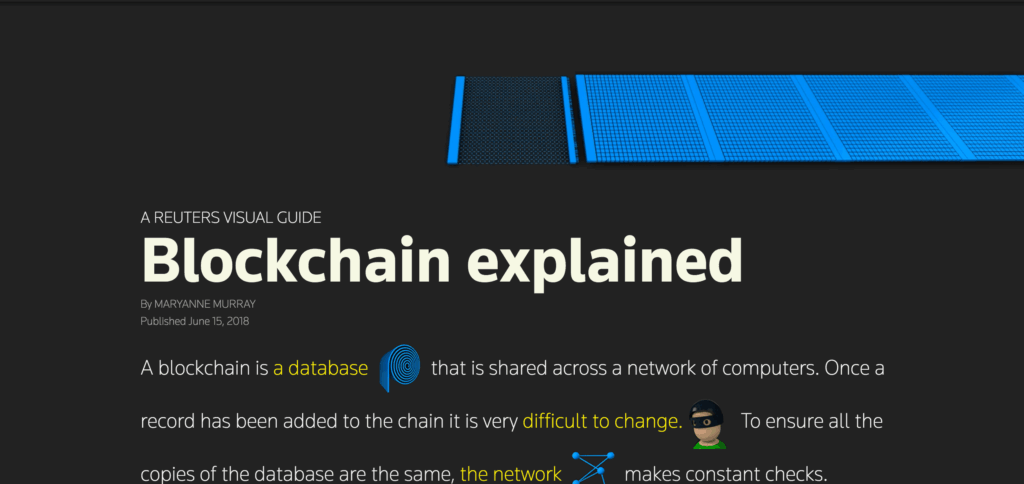
It started as a way to manage monetary transactions (i.e. cryptocurrencies like Bitcoin or Ethereum), but the underlying technology has already made its way onto other sectors of the economy and society in general.

Within an educational setting this is becoming a new tool that allows to institutions to certify students’ curricula, grades and academic performance. Although it is not yet certified by official European Union bodies (EC), said certification is expected to become law by the end of the current year (2019).

With Blockchain technology, companies, employees and candidates would have access to essential information before entering the academic or labor market.
2. Data security 

New EU legislation, which came into effect last December, is particularly important for schools with students connected via digital platforms.

The standard, in general, updates and extends the ‘digital’ obligations of corporations, such as Google, Micosoft, Facebook and the like.

From now on, it will be even more important to take into account that the students’ personal information is not being used for commercial or political purposes or that their digital fingerprint is not being monetized by big tech corporations.


https://www.rm.com/~/media/Video/RM-Education/Live/Articles/Steve-Forbes-GDPR-webinar.mp4


3. Immersive technologies: AR and VR

As things stand, it is clear that students are physically connected to their smartphones, tablets and laptops. We can no longer refrain from a reality in which learning is, albeit partially, digital.

Immersive technology applies virtual reality (VR) and augmented reality (AR) in the classrooms, enabling students to come into contact with technology and feel immersed in both realities to achieve specific objectives.

In this video, from the Spanish teacher-led initiative InnoBAR, Moisés Llorente shows how to apply augmented reality in the classroom in a very simple way.


4. The challenges of communicating truth to millennials

Since time immemorial, people have become accustomed to believing that the information relayed by textbooks and media is true and, consequently, reliable.

The arrival of the 21st century has already brought about some important changes in this respect, and has been under increased scrutiny following controversies enveloping events such as the recent Brexit referendum (2016) or the last presidential elections for the office of the president of the United States of America which elected the populist Donald J. Trump.

In this regard teachers have found the need to be particularly attentive to the sources of information and their veracity before relaying them to their students.


What do you think of these 4 EdTech trends for 2019? Did you already know them?

Entradas relacionadas:

  • Estudio sobre el uso de la tecnología en la educación de BlinkLearning
    What is the BlinkLearning Survey on the Use of…
  • 8 methodologies that every 21st century teacher should know
    8 methodologies that every 21st century teacher should know
  • Design Thinking
    Design Thinking: what it is and how to integrate it…
  • smart-classrooms-with-aipowered-assessment-tools-educational-environments-using-ai-provide-realtime-assessments-scaled
    AI in education: Why Access isn’t enough and can be…
  • aprendizaje adaptativo
  • aprendizaje activo
  • competencia digital
  • metodologías
  • educación
BlinkLearning Comunicación

Post navigation

Previous
Next

Leave a Reply Cancel reply

Your email address will not be published. Required fields are marked *

Tags

#FeaturedBlinklearningNews metodologías competencia digital blinklearning edtech docentes aprendizaje activo #realinfluencers aprendizaje adaptativo educación

Continue reading

AI, Responsible technology

AI in education: Why Access isn’t enough and can be counterproductive)

1 de April de 2026 BlinkLearning Comunicación No comments yet

What scientific evidence reveals about the real impact of AI on learning (and what schools and publishers need to decide)…

Responsible technology

5th Survey on the use of technology in education

14 de May de 2020 BlinkLearning Comunicación No comments yet

For the 5th consecutive year, we present the annual survey on the use of Technology in Education, carried out in Spain, Argentina, Colombia, Mexico and Peru. In times of COVID we keep seeking to bring you the best statistics identifying trends and the evolution of technological habits of students, as well as the needs of teachers worldwide.

The triumph of active methodologies in the classroom
Schools, Responsible technology

The triumph of active methodologies in the classroom

16 de December de 2019 BlinkLearning Comunicación No comments yet

Active methodologies, and particularly Project Based Learning, are increasingly essential in the modern teaching process.

A space where we share news, experiences and resources on education, technology and innovation to help the educational community tackle the challenges of digital learning.

About BlinkLearning

At BlinkLearning, we drive more innovative education by connecting technology, content and people. For over 16 years, we have supported the entire education community in making digital transformation a reality, with a real impact on learning.

Follow us on social media
Subscribe to our newsletter
Subscribe
Get in touch with us

comunicacion@blinklearning.com

© Copyright BlinkLearning S.L

  • Aviso legal
  • Política de privacidad
  • Sistema de conformidad legal
  • Política de cookies (UE)
  • Configurar cookies
  • Aviso legal
  • Política de privacidad
  • Sistema de conformidad legal
  • Política de cookies (UE)
  • Configurar cookies
Gestionar consentimiento
Para ofrecer las mejores experiencias, utilizamos tecnologías como las cookies para almacenar y/o acceder a la información del dispositivo. El consentimiento de estas tecnologías nos permitirá procesar datos como el comportamiento de navegación o las identificaciones únicas en este sitio. No consentir o retirar el consentimiento, puede afectar negativamente a ciertas características y funciones.
Funcional Always active
El almacenamiento o acceso técnico es estrictamente necesario para el propósito legítimo de permitir el uso de un servicio específico explícitamente solicitado por el abonado o usuario, o con el único propósito de llevar a cabo la transmisión de una comunicación a través de una red de comunicaciones electrónicas.
Preferencias
El almacenamiento o acceso técnico es necesario para la finalidad legítima de almacenar preferencias no solicitadas por el abonado o usuario.
Estadísticas
El almacenamiento o acceso técnico que es utilizado exclusivamente con fines estadísticos. El almacenamiento o acceso técnico que se utiliza exclusivamente con fines estadísticos anónimos. Sin un requerimiento, el cumplimiento voluntario por parte de tu proveedor de servicios de Internet, o los registros adicionales de un tercero, la información almacenada o recuperada sólo para este propósito no se puede utilizar para identificarte.
Marketing
El almacenamiento o acceso técnico es necesario para crear perfiles de usuario para enviar publicidad, o para rastrear al usuario en una web o en varias web con fines de marketing similares.
  • Manage options
  • Manage services
  • Manage {vendor_count} vendors
  • Read more about these purposes
Ver preferencias
  • {title}
  • {title}
  • {title}