
Main EdTech trends for 2016
“The future has already arrived, it’s just not evenly distributed yet”. –
William Gibson, sci-fi icon and author of Neuromancer (1984)
More gadgets and new methodologies in the classroom
Writing for EdTech Magazine K-12, a benchmark online publication for the US primary and secondary education market, D. Frank Smith makes unusual, perhaps overly futuristic, predictions: virtual reality goggles available in classrooms, ubiquitous 3d printing, the continuing expansion of the “Internet of Things” (a term that refers to the increasing network conectivity between multiple devices and everyday objects), a much wider prevalence of wearables, and, finally, artificial intelligence-powered technology in the classroom.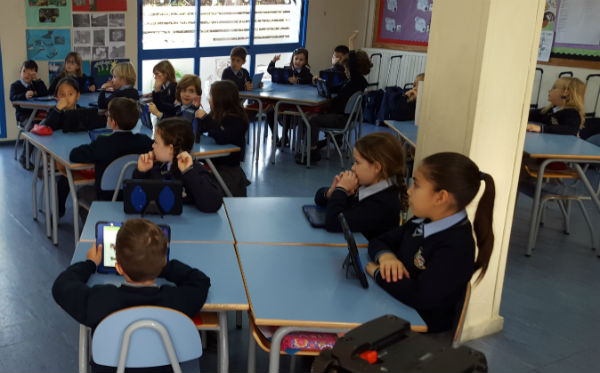
New learning methodologies, specifically those spanning a wide range of skills including creativity, critical thinking and digital literacy, may become an important focal point for EdTech in 2016
Substantiating the difference of opinions among the experts this year is Janet Pinto, Curriki’s Chief Academic Officer, who has put forth the impression of an increased enphasis on Open Educational Resources as well as in Blended and Adaptative learning models. Additionally, Ms. Pinto foresees a larger device integration (the above mentioned “Internet of Things”) and a decreased enthusiasm around massive data collection and other Learning Analytics tools.
Las previsiones de 2015 se han confirmado
2015 forecast mainly on target
It would be also interesting at this point to go back and review what was said by industry analysts a year ago. Nick Morrison, of Forbes magazine, wrote on January 1st, 2015: “While technology is undoubtedly a useful weapon in any teacher’s armoury”, he stated, “there is a lot of talk about the latest gizmo and not enough about what helps students learn. Not so much a trend as an aspiration is that 2015 will see more inquiry into how technology aids teaching and learning, with less emphasis on the technology and more on showing how it makes a difference”. In this piece for the US business publication, Mr. Morrison chose customization, online learning and methods such as Blended and Flipped Classroom as the main drivers to watch out for over this past year. More content sharing over social networks and an “explosion” of wearables were also among his projected trends. It should be noted that, with the exception of wearables (smart watches didn´t exactly have a great year and no other relevant products arrived in the EdTech market), his predictions were mostly on point. In December 2015, Edutopia’s Monica Burns also reviewed such forecasts and concluded most experts got it right. She does however note something a lot of analysts missed, and that was the widespread replacement of a 1:1 classroom model with a colaborative one. Classrooms are no longer arranged in rows of students listening to a teacher’s lesson, but rather sit in small groups (4 to 6 students) and work together while the teacher provides orientation. We shall see then how many of the trends put forward for 2016 will actually become fact but, we at Blink EdTech share the aspiration that technology may become more and more a tool for teachers first and foremost, enabling them to keep inspiring students all over the world.Fotos: K.W. Barrett (CC); BlinkLernin’s archive, all rights reserved.