Skip to content
  • Blog de BlinkLearning
  • Blog de BlinkLearning
  • Blog de BlinkLearning
  • Blog de BlinkLearning

Search the blog

Main sections of the blog

  • AI
  • Schools
  • Publishers
  • Responsible technology
  • AI
  • Schools
  • Publishers
  • Responsible technology
  • EN
    • ES
    • BR
Schools

Key points driving Cooperative Learning at Madrid’s Arenales Carabanchel
2 de December de 2015 BlinkLearning Comunicación No comments yet
By Javier González Romero, Head of marketing at BlinkLearning.
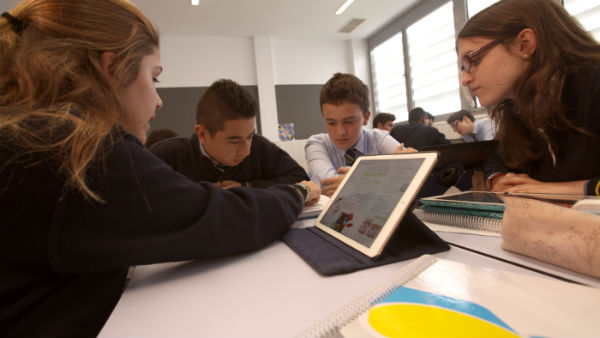
The other day I visited the Arenales Carabanchel School and I had the good fortune to attend a Computer Programming class where a Cooperative Learning session was taking place.

This methodology is not one of the most recent, but the fact of being able to see the dynamics in situ and having the explanations of Jose Luis Marrero, ESO and Baccalaureate Director and ICT Coordinator of the center, made me think that it could be interesting to investigate and share its main features in #Realinfluencers.

What is cooperative learning?

Cooperative learning is a methodology that emerged at the beginning of the 1990s from the likes of Johnson & Johnson, Kegan, although the American philosopher John Dewey was his first inspiration at the beginning of the 20th century. The main characteristic is that it is structured based on the formation of groups of 3-6 people, where each member has a specific role and to reach the objectives it is necessary to interact and work in a coordinated manner. In cooperative learning, the final objective is always common and will be achieved if each of the members successfully performs their tasks. On the other hand, in the Individual Learning the student focuses on achieving their objectives without having to depend on the rest of their classmates. The definition of the role of each student and the structure of the group can be established both by the teachers and by the students themselves. According to some studies, when the teachers are the ones define the roles and the learning objectives, it is called Cooperative Learning and when the students are the ones taking on that responsability it is called Collaborative.

In cooperative learning, heterogeneous groups of students work together in a coordinated manner to solve academic tasks and deepen their own learning and the objectives of the participants are closely linked

What are the advantages of Cooperative Learning?

Coordination: The team needs all the members to learn and be able to transmit to the rest of their colleagues the necessary knowledge to solve the problem. Interaction: Not only is the learning of the subjects enhanced, it is also necessary to use social skills to request information, define processes, negotiate priorities … and the performance of roles: leader, organizer, facilitator, consensus seeker or the constant. Practical application: they need not only to understand the theory of the problem but also to know how to put it into practice in “real” situations, which leads the student to a deep understanding of the subject.

Social skills, practical application of theory, support among students and sense of responsibility are some of the benefits of this model

Support: improves the skills of those students who are more delayed with respect to the group, since they will have the constant support of the rest of their classmates. If the group is well balanced there will always be a partner willing to explain and guide the students with more difficulties. Responsibility: students are responsible not only for completing their tasks to achieve the objective, but also for supporting other classmates.

The role of the teacher in Cooperative Learning

The teacher must establish the following parameters so that the methodology works correctly: Create groups of between 3 and 6 people based on heterogeneity and positive interdependence, where everyone complements and takes responsibility for their work and that of others. Specify the objectives of both the project and the learning before starting the dynamic and make clear what are the criteria for success. Organize the space so that it favors the interaction between the students and the access to the necessary resources to carry out the project. Provide guidance on the steps to follow to achieve the objective, the work process or the role of each of the team members.

The teacher creates the groups, establishes objectives, guides on how to achieve them and finally must adequately evaluate the group system

Advise the groups during the work process and help them in the search of solutions before the possible inconveniences that are going to be found. Finally, and given that the dynamics wants to promote group work, it is also key that the evaluation has the same character, both individual and group.

Warnings about Cooperative learning

It is not an easy model to implement, it implies many changes with respect to conventional dynamics. Establish levels of success: there will be students who are not active and do not adapt to teamwork, letting themselves be carried by the cadence of the group without contributing. Do you have experience as a teacher in Cooperative Learning? Leave your comment.

REFERENCIAS

http://www.educarueca.org/IMG/pdf/Aprendizaje_cooperativo.pdf

http://fernandotrujillo.es/wp-content/uploads/2010/05/AC_libro.pdf

http://grupsderecerca.uab.cat/grai/es/content/m%C3%A9todos-de-aprendizaje-cooperativo

http://www.studygs.net/espanol/cooplearn.htm

http://www.madrid.org/dat_capital/upe/impresos_pdf/AprendizajeCooperativo2012.pdf


Foto: archivo BlinkLearning, todos los derechos reservados

Entradas relacionadas:

  • smart-classrooms-with-aipowered-assessment-tools-educational-environments-using-ai-provide-realtime-assessments-scaled
    AI in education: Why Access isn’t enough and can be…
  • 5 Razones pedagógicas para implementar un proyecto educativo digital
    5 pedagogical reasons to implement a digital…
  • Estudio sobre el uso de la tecnología en la educación de BlinkLearning
    What is the BlinkLearning Survey on the Use of…
  • Etapas para implementar un proyecto digital en las aulas_BlinkLearning
    7 steps to implement a digital project in the…
  • aprendizaje cooperativo
  • docentes
BlinkLearning Comunicación

Post navigation

Previous
Next

Leave a Reply Cancel reply

Your email address will not be published. Required fields are marked *

Tags

aprendizaje activo edtech blinklearning educación docentes aprendizaje adaptativo #FeaturedBlinklearningNews metodologías #realinfluencers competencia digital

Continue reading

Schools

Chef E and her recipes for education

26 de November de 2019 BlinkLearning Comunicación No comments yet

Realinfluencers gets into the kitchen of Marisol Cipagauta, better known as Chef E, to learn more about her education recipes. In addition, it answers all our questions about the program, ICT in the classroom, social networks and the role of teachers.

Responsible technology

SEPEC partners with BlinkLearning for its Collaborative Learning PhD

1 de October de 2019 BlinkLearning Comunicación No comments yet

The SEPEC Foundation will begin using BlinkLearning’s educational platform at the Collaborative Learning School created by the Jesuits of Barcelona.

Schools

Toni García’s perfect teaching methodology

19 de March de 2019 BlinkLearning Comunicación No comments yet

Toni García Arias, winner of the Best Primary Teacher of Spain award 2018, shares some of the keys to his success in the classroom.

A space where we share news, experiences and resources on education, technology and innovation to help the educational community tackle the challenges of digital learning.

About BlinkLearning

At BlinkLearning, we drive more innovative education by connecting technology, content and people. For over 16 years, we have supported the entire education community in making digital transformation a reality, with a real impact on learning.

Follow us on social media
Subscribe to our newsletter
Subscribe
Get in touch with us

comunicacion@blinklearning.com

© Copyright BlinkLearning S.L

  • Aviso legal
  • Política de privacidad
  • Sistema de conformidad legal
  • Política de cookies (UE)
  • Configurar cookies
  • Aviso legal
  • Política de privacidad
  • Sistema de conformidad legal
  • Política de cookies (UE)
  • Configurar cookies
Gestionar consentimiento
Para ofrecer las mejores experiencias, utilizamos tecnologías como las cookies para almacenar y/o acceder a la información del dispositivo. El consentimiento de estas tecnologías nos permitirá procesar datos como el comportamiento de navegación o las identificaciones únicas en este sitio. No consentir o retirar el consentimiento, puede afectar negativamente a ciertas características y funciones.
Funcional Always active
El almacenamiento o acceso técnico es estrictamente necesario para el propósito legítimo de permitir el uso de un servicio específico explícitamente solicitado por el abonado o usuario, o con el único propósito de llevar a cabo la transmisión de una comunicación a través de una red de comunicaciones electrónicas.
Preferencias
El almacenamiento o acceso técnico es necesario para la finalidad legítima de almacenar preferencias no solicitadas por el abonado o usuario.
Estadísticas
El almacenamiento o acceso técnico que es utilizado exclusivamente con fines estadísticos. El almacenamiento o acceso técnico que se utiliza exclusivamente con fines estadísticos anónimos. Sin un requerimiento, el cumplimiento voluntario por parte de tu proveedor de servicios de Internet, o los registros adicionales de un tercero, la información almacenada o recuperada sólo para este propósito no se puede utilizar para identificarte.
Marketing
El almacenamiento o acceso técnico es necesario para crear perfiles de usuario para enviar publicidad, o para rastrear al usuario en una web o en varias web con fines de marketing similares.
  • Manage options
  • Manage services
  • Manage {vendor_count} vendors
  • Read more about these purposes
Ver preferencias
  • {title}
  • {title}
  • {title}